
When you throw out the trash, where does everything go? It’s not something we think about regularly, but if you’re conscious of the environment or are considering hiring a cleaner for your home or business, you might want to know more about the process!
This article will talk about how your bins are collected, when, how, and what happens afterwards.
What Happens to Your Rubbish After It’s Collected in Melbourne?
Once the bin truck empties your bin, the waste doesn’t all go to the same place. Melbourne councils sort rubbish, recycling and organic waste through different facilities so that as much material as possible can be reused or repurposed instead of going straight to landfill.
Here’s what happens behind the scenes:
1. General Rubbish Goes to a Waste Transfer Station
Household rubbish from red-lid bins is taken to a local transfer station. Here, the waste is compacted and loaded into large trucks that transport it to licensed landfill sites around Victoria.Some facilities also remove metals or other recoverable materials before landfill disposal, but most general waste is not recyclable and must be buried.
2. Recycling Goes to a Materials Recovery Facility (MRF)
Your yellow-lid bin is delivered to a materials recovery facility, where everything is sorted by:
- magnets
- optical scanners
- air jets
- conveyor belts
- and sometimes by hand
Paper, plastic, metal and glass are separated, baled, and sent to specialist recyclers.
For example:
- Glass is crushed and turned into new bottles or road base
- Paper and cardboard are pulped and remade into packaging
- Plastics are processed by grade and reused for manufacturing
- Steel and aluminium are melted down and recycled endlessly
Recycling only works if the contents are clean and free from contamination, which is why councils put so much emphasis on correct bin use.
3. Food & Garden Waste Becomes Compost
Green-lid organics bins are taken to industrial composting facilities.
Here, food scraps, garden clippings and other organic matter are:
- shredded
- heated and aerated
- turned regularly
- and allowed to break down
Within weeks, this becomes nutrient-rich compost used for parks, farms, landscaping and soil improvement projects across Victoria.
4. Hazardous and Problem Waste Goes to Specialist Facilities
Items that should never go in household bins (such as batteries, chemicals, e-waste or paint) are processed separately at EPA-licensed facilities.
These centres safely remove toxins, recover valuable metals and prevent dangerous materials from entering the environment.
5. Contaminated Loads Can Be Rejected
If a truck has too much contamination (e.g., food in the recycling or nappies in the green bin), the entire load may be dumped as landfill. This is one of the biggest reasons Melbourne councils stress proper sorting.
In the next section, we’ll talk about bin types, what you can put in them, and important things to know before they go to their next destination.
Bin Types: An Overview
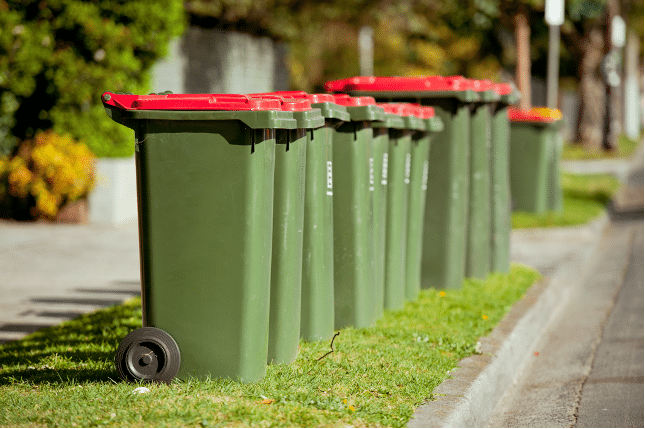
Here are the different bin types and what you can put in them!
Rubbish (Red or Dark Green Lid)
Your red-lid bin is for everyday household waste and is usually collected weekly. If you’re unsure where something belongs, this bin is normally the safe option. It’s also where anything that can’t be recycled or composted should go. Bag all of your items before placing in this bin.
Common examples include:
- nappies
- disposable coffee cups
- broken household items
- soft plastics
- polystyrene
- black plastics
- clothing that can’t be donated
Avoid placing chemicals, batteries, electrical items, or paint in these bins. These need special disposal.
Recycling (Yellow Lid)
Your recycling bin is picked up every second week, except for low-rise multi-unit properties with a communal food and organics service. Make sure items are clean, dry, and loose (don’t bag anything).
You can recycle:
- clean cardboard and paper
- glass bottles and jars
- tins and aluminium cans
- plastics that display recycling numbers 1–5
Things that cannot be recycled include soft plastics, medical waste, electrical goods, timber, foam, clothing, takeaway cups, and any plastic that is black or isn’t clearly recyclable.
Food & Garden Waste (Lime Green Lid)
Many councils now offer a green bin for organic waste like garden clippings and food scraps. This is also collected weekly and is designed to prevent food waste from going to landfill.
You can put in:
- leftovers and food scraps
- fruit and veg
- coffee grounds and loose tea
- grass clippings, leaves, weeds
- small branches
Do not use this bin for nappies, pet waste, textiles, soil, plastic bags, packaging, or non-organic household rubbish.
Bin collections continue as normal on public holidays, except for Good Friday and Christmas Day. If your usual pickup falls on one of these dates, it will be carried out the following day.
Read: Skip Bin Hire vs. Alternatives: Choosing the Best Waste Disposal Option
Why using the correct bin matters? Putting the wrong item in a bin can cause contamination, which means the truck might refuse to collect your bin, or your council may issue warnings. If contamination continues, some councils even remove bins until the issue is fixed.
Not sure what goes where? Many councils provide online tools that allow you to search for an item and find out the correct disposal method (e.g., electronics, batteries, or hazardous waste). You can also download a local waste guide if you want a quick reference list. And if you are not sure when your waste will be collected, the City of Melbourne has an excellent online tool.
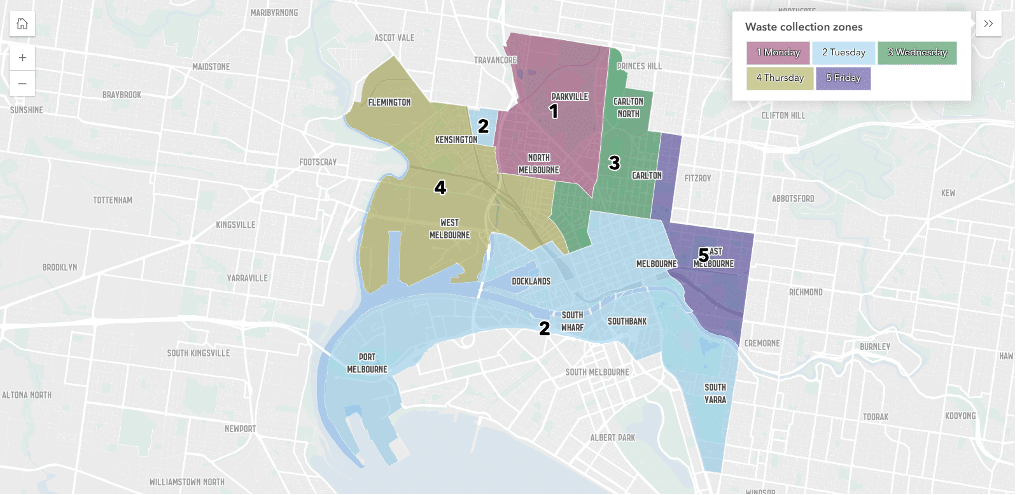
To make sure your bins are collected without issues, put them out the evening before pickup (after 6pm) or no later than 6am on collection day. Keep lids closed properly and avoid leaving extra rubbish beside or on top of the bin, as this can cause the collection to be missed.
If more than one bin is going out, leave some space between them (around 30cm) and keep them clear of power poles, parked cars, and street signs. Once emptied, bins should be brought back onto your property.
Residents in apartment buildings may have a building or property manager who handles this process for the complex.
Bin Sizes
Most homes receive a standard 120L general waste bin (red lid); however, some older bins may still have dark green lids. These are gradually being changed to red as part of the industry standard.
Households also receive either a 120L or 240L recycling bin. If you need extra recycling capacity, many councils let you request a larger bin at no additional cost. Bin size information is usually located on the top rim of the bin, or you can refer to your council’s size guide for measurements and capacity.
When You Move
Bins stay with the property even when residents move out. They’re registered to the address and remain for the next household or tenant. If you’re relocating, just leave the bins where they are so the new occupants can continue regular waste collection.
Need to Recycle or Declutter Faster? Junk Moovaz Help
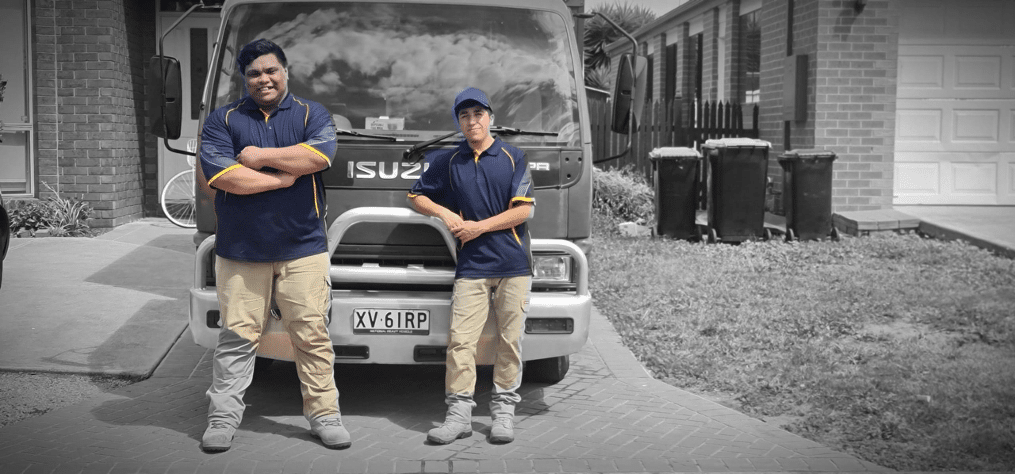
Sometimes you can’t wait for the weekly rubbish collection, and you need to clean things up in a hurry. Junk Moovaz have your best interests in mind with fast, affordable, friendly rubbish removal in Melbourne.
If it is taking up space and you want it gone, chances are Junk Moovaz can deal with it. The team handles most household, office, and commercial items, and often takes things that local hard rubbish collections will not. Everything is loaded for you, so there is no need to drag heavy pieces to the kerb or spend hours sorting it all yourself.
The crew takes care of the heavy lifting, recycling, and disposal so you can get on with your day without any hassle.
Below are some of the common things we remove!
Domestic Items
- furniture
- mattresses and bed bases
- TVs and appliances
- bicycles
- rugs and carpet
- scrap metal
- whitegoods and fridges
- cardboard and packaging
- pianos
- gym gear
- spas and hot tubs
- renovation waste
- pool tables
- clothing
- general household rubbish
Office & Commercial Items
- computers, laptops, and screens
- printers and scanners
- office chairs and desks
- boardroom furniture
- filing systems and drawers
- office bins
- signage and artwork
- safes
- partitions
- old files and documents
Industrial Items
- shelving and storage racks
- pallets and timber
- scrap metal
- old machinery
- industrial appliances
- outdated equipment
- unwanted stock
Why Choose Us for Rubbish Removal in Melbourne?
We take the stress out of clearing your home, office, or property. Our team handles everything from the lifting and loading to recycling, donating and responsible disposal, so you can relax knowing the job is done properly.
Here’s why Melbourne customers choose us:
- Same-day service, 24/7 availability
- Affordable pricing with no surprises
- Eco-friendly disposal and recycling
- Police-checked, fully insured team
- Local Melbourne business
- We donate usable items to local charities
- Fast, respectful, and reliable service
- Only pay for the space you use
From single household items to large property clean-outs, we make rubbish removal quick, affordable, and hassle-free.
Reliable Rubbish Removal for Melbourne Locals: Clear Some Space
Whether you are getting rid of old furniture, tackling a shed full of clutter, dealing with renovation waste or organising a full home or office clean-out, we are ready to help. We service all of Melbourne, handle all the heavy lifting and take care of disposal and recycling so you don’t have to worry about a thing.
We’re available 24/7, offer same-day service, and recycle as much as possible to keep waste out of landfill. Just give us a call and we’ll take care of the rest.
Contact us by calling 0411 319 423 or emailing info@junkmoovaz.com.au for residential rubbish removal, commercial rubbish removal, and to learn more about what we take.